SommerCamp + CM26
August 27 - 30
Frankfurt am Main, Campus Bockenheim | Germany

Content
- How to Critical Making
- About
- Location & Context
- Fees & Parcipitation
- The Program
- Summer Camp
- Barriers
How to Critical Making
We’re kicking things off on Thursday at 4 pm with a welcome at Café Rabe – and everyone is invited to join us from the start!
But we know that not everyone can arrive at the same time. So whenever you get here, we recommend making our Info Point at the Studierendenhaus your first stop. There you can pick up your programme booklet and get a quick overview of all the workshops, talks, and times happening that day.
Map of Campus Bockenheim
Critical Making is a three-day, interactive gathering centred on open workshops, makerspaces and collaborative working.
Alongside inspiring talks and substantive input, the focus is above all on hands-on experimentation and collaborative creation. Visitors have the opportunity to discover new worlds, get actively involved and explore different perspectives. At the same time, space is deliberately created for exchange, discussion and community.
The aim of the event is to highlight the importance of open, collaborative spaces and to spark a discussion about how they can enrich our communities and contribute to a vibrant, democratic society.
We invite you to play an active part in shaping this event! Through an open call, we have gathered a wide range of creative initiatives, themes and formats (the deadline for submissions was 14 June).
The conference is being held in conjunction with the Open Workshops’ Summer Camp. Whilst experiences are shared and questions relating to collective practice are discussed in panels, talks and workshops, the camp is a place for building, repairing, cooking, programming and improvising. The conference and the camp form a shared space for experience, in which discourse, practical work and everyday interaction intertwine.
Climate change, the depletion of resources and growing social inequalities are fundamentally challenging existing economic and production systems. Global supply chains, the extraction of raw materials and consumption models designed for constant renewal cause environmental damage, exacerbate dependencies and concentrate decision-making power in the hands of a few players. How we produce, use and conserve resources is therefore not merely a technical issue, but a social one.
In this situation, practices aimed at repairing, reusing and doing things yourself are becoming increasingly important. They represent a shift – away from linear consumption patterns towards community-based forms of production and design.
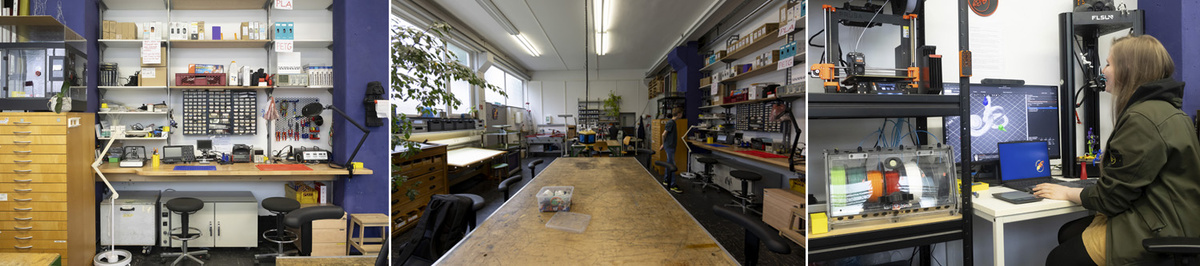
Such practices require spaces where people can meet, share knowledge and work together. Open workshops, makerspaces and repair initiatives are examples of such spaces for collaborative practice. Here, people support one another, develop practical solutions to everyday challenges and combine technical and creative work with social values and participation.
The ‘Critical Making’ conference builds on these collaborative approaches and brings together people who work in a practical and reflective manner on material, social and technical infrastructures.
Location & Context
The conference and camp will take place on the Bockenheim Campus in Frankfurt – a place where historic debates on criticism, education and practice intersect with contemporary forms of collaborative cultural and infrastructure work.
Since the university moved away, the campus has become a testing ground for community-based initiatives. A vibrant network of initiatives and artists and cultural practitioners has grown around the evolving Frankfurt Student Union building. Several key locations on what is now the Cultural Campus were saved from demolition through civic engagement and squatting, and have been given a new purpose.
These include the temporary use of the Akademie der Arbeit, with its ada_kantine and studios; the Dondorf Druckerei, which serves as an exhibition venue for the Schirn Kunsthalle Frankfurt and a space for numerous civil society initiatives; and the former art library, which is now home to Vision31. Workshops, self-organised meeting places and cultural venues such as the Offenes Haus der Kulturen, MakeLab Frankfurt and the self-managed Café Rabe, together with neighbouring cultural and research institutions, shape the area into a vibrant neighbourhood that bridges everyday life, science, art and activism.
Initiatives and committed individuals are building on what already exists to further develop the area, and are exploring new ways of collaborating, sharing resources and collectively shaping urban spaces.
Fees & Participation
Participation in the Critical Making Conference is free. You can purchase drinks on-site at reasonable prices. Advance registration is required only for some of the workshops.
The program
Please note: Most of the program is open to the public. However, some of the workshops have a limited number of participants, so registration is required. You’ll find the registration links in the program below.
Thursday, August 27
Afternoon:
- Arrival starting at 3:00 p.m.
- Mini Lab - How Do We Build the "We" (workshop with Carmen Herzog, Heinrich Böll Foundation) DE*
- Tour of the Kulturcampus (Offenes Haus der Kulturen) DE
- Start of construction projects DE/ENG
Evening (from 6 pm):
- Prototype Fund (talk by Paul Robben) DE
- Hackerspaces - We All Need Community (talk by Mitch Altman) ENG
- Inclusive Bicycle Self-Help Workshop - An Attempt at Reflection (panel discussion hosted by Mehrweg e.V.) DE
Friday, August 28
Morning (from 10:30 am):
- Opening remarks by PD Dr. Franka Schäfer: “Playgrounds for the Next Society” DE
- How to Ink/Stitch: A Practical Approach to Creating Embroidery Art (workshop with Moritz Bösenberg and Matteo Hoeren, FREILab e.V.) ENG, registration mandatory!
- Forest Stories – Critical Making in the Forest (workshop with Sara Reichert, VOW) DE
All day:
- Construction Projects DE/ENG
Afternoon (from 3 pm):
- Plans and Plants (analog multiplayer game with Christopher Krause & Tilman Aumüller) DE, registration mandatory!
- It’s All Just an Illusion—Upcycling Furniture Surfaces (workshop with Jan, Kunst-Stoffe e.V., Dreh Dein Ding) DE, registration mandatory!
- Space for Everyone—Without Everyone? The Spatial Conflict Initiative as a Workshop for Reading Space (lecture by Lea Sascha Furbach) DE
- workshop matters (workshop with Victoria Paeva & Ciorgia Bandiera) ENG
- DI.DAY: Rebelling Together for Gerater Digital Sovereignty (lecture by Björn Staschen, Save Social) DE
- Introduction to Modular Synthesizers (workshop with PensamentSalvatge) ENG
Evening (from 7 pm):
- Repair Salon (Presentation of a repair project for large household appliances by Martin Langlinderer) DE
- Framework Co-Wiki (Presentation by Das Habitat Augsburg e.V.) DE
- What android gaming could be exposition (V3) ENG
- Opportunities and Limitations of “Making” in International Disaster Relief (presentation by Sebastian Jünemann, Victoria Wenzelmann, CADUS) DE
- Mapping the Unknown: Knowledge Finds a City! Information Shapes Urban Spaces for the Common Good (dialogic performance and mapping installation by Paola C.D. Wechs)
Saturday, August 29
Morning (from 10:30):
- Opening remarks by Ouassima Laabich "We’re building the future from what we have. Workshops as spaces for practicing the societies of the future" DE
- TV-B-Gone: Turn Off TVs and Learn to Solder! (workshop with Mitch Altman) ENG
- Who Actually Feels at Home Here? Rethinking Spaces! (workshop with Norah Joskowitz, formlos e.V.) DE
- I Know Something You’re About to Know: ZINE WORKSHOP (with Leslie and Santi) DE
- Collective Case Consultation—Reflecting Together on Conflicts in Groups and Developing New Solutions (workshop with Anjusch) DE, registration mandatory!
All day:
- Human-Plant-Computer Interaction (workshop with Nour from Trinity College Dublin) ENG, registration mandatory!
- Construction Projects DE/ENG
Afternoon (from 3 pm):
- Shaping Membership Dues in a Spirit of Solidarity (workshop for VOW members) DE
- Bio-Yarn & Collaborative Handcrafting (workshop with Meike Seus) DE
- Sitting with the Tension: Exploring Generative Artificial Intelligence (GenAI) and Textile Craft (workshop with Pamela Nelson) ENG registration mandatory!
- 3D Printing of the Anatomy of the Clitoris and Penis: Sex Education in the Makerspace (workshop with Marie, heart of code) DE, registration mandatory!
- BlackMesh - Build Your Own Messenger & Play the Network (workshop with Robert Bogs) DE
- Code Some Noodles - Machine Control as Design Material (presentation by Peter Ehses-Reifer) ENG
Evening (from 7 pm):
- WeKitchen (project presentation with Akpene and Jonathan) DE
- Anti-Stalking Hacking (talk by Bubb) DE
- Mesh Networks and Open-Source Satellite Technologies (project presentation by Waag Futurelab NL) ENG
- Welding Lasers in an Open Workshop—Are They Necessary? (workshop with Joris Bijkerk) DE
- Kidmos & Kontro (live audiovisual performance exploring the transformation of urban spaces and the loss of urban identity)
Sunday, August 30
Morning:
- Excursion and Exchange of Experience at the BiBEr* Open Workshop in Frankfurt-Griesheim, DE
- Fediverse Instead of Platform Power – Communicating Without Big Tech Companies (Workshop with Corinna Balkow) DE
- Glass jewelry with a torch (workshop with Jennifer Leis, VOW) DE, registration mandatory!
- Space for Movement _ Movement for Space (workshop with Merle, Nicki, and Jonas, AStA Sport HfG Offenbach) DE
- Completion of the construction projects DE/ENG
Noon/Afternoon:
- Clean-up party DE/ENG
* The language of each event is indicated as DE (German) or ENG (English).
The Summer Camp of Open Workshops
Each year, the community of Open Workshops comes together to hang and have a good time with each other. We discuss topics, do things, inspire each other, and make plans. While cooking together, exploring the area, chilling out, and changing the world. This year, all of this is taking place in conjunction with the Critical Making Conference. The program is the same. You should register for the Summer Camp if you want to stay overnight on campus and will be there for 2–4 days.
Click here for registration
Accommodations
Unfortunately, the university’s decision-making process is moving very slowly, and it’s not yet certain whether we’ll be allowed to camp. We’re working hard to secure free accommodations. We really hope the university will come to a positive decision. Since we can’t count on that, we’ve set up a bed-sharing platform where you can find a private accommodation. We’ll keep everyone who has registered updated on the camping options.
In case you need more security and can afford it, it's a good idea to stay at a nearby hotel or hostel instead.
Meals
Free meals are provided for everyone registered for the Summer Camp. We’ll serve delicious vegan and vegetarian breakfasts, lunches, and dinners. We’ll all pitch in together to cook and clean up. Please indicate any food intolerances on the registration form. We’ll do our best to accommodate them.
Costs
Participation, overnight stays in your own tent or car, and meals are free for all Summer Camp participants. You can purchase soft drinks and alcoholic beverages on-site at reasonable prices.
If you contribute to the program, we’ll reimburse your travel expenses if you’d like. We can also reimburse accommodation costs if needed.
We want to make it possible for everyone to participate: If you’re facing financial difficulties, we may be able to cover some or all of your travel expenses. Please contact Anjusch about this.
Barriers
The event will take place in various buildings. There is There is an accessible composting toilet.
Offenes Haus der Kulturen
Mertonstraße 26-28, 60325 Frankfurt am Main
The ground floor is accessible to people with disabilities. Accessible restrooms are located on the first floor; an elevator is available, and keys for the elevator and restroom can be obtained at the front desk. Unfortunately, there is no wayfinding system.
MakeLab – Offene Werkstatt, Makerspace & 3D-Labor
Robert-Mayer-Straße 8, Raum 09
Unfortunately, due to various structural issues, we do not have fully accessible entry, but we are at least striving to provide barrier-free access. We’re located in the basement, but there’s an elevator at the back of the building. However, it’s behind a door that, unfortunately, still doesn’t have a doorbell button and is also difficult to open. In addition, the hallway leading to the elevator—which provides access to the MakeLab—is restricted or locked. Due to the distance and the thick walls, we have not yet been able to install a doorbell here in a practical and accessible manner. Unfortunately, we therefore have no choice but to suggest that you meet us outside or call us so we can assist you with access. Alternatively, you can call the university’s security service for assistance with access; however, we are unsure whether they also provide assistance with accessing the hallway. Unfortunately, there is no wayfinding system in place.
Café Rabe – Begegnungsraum für eine solidarische Stadt von Unten
Jordanstraße 3
Unfortunately, Café Rabe is anything but accessible in terms of its physical layout. Not only is the entrance via three steps, but the restrooms are also located in the basement. The seminar room on the first floor is also accessible only via a staircase with no elevator. We have been exploring options for quite some time and are specifically incorporating this into our plans for a comprehensive renovation following our takeover of the building and the associated housing project. So far, we haven't found any short- or medium-term options that are feasible for us to change the situation—it's really difficult with Wilhelminian-style buildings. If you have any ideas, please feel free to reach out to us!
Hörsaalgebäude
Mertonstraße 52-54
The building is accessible to people with disabilities and has adequately sized elevators. The lecture halls are equipped with wheelchair-accessible seating, but due to their design, there is a slope within the room. We try to use only those lecture halls that are more accessible for our events. The building also consists of two sections that are not connected on every floor in a way that is accessible to people with disabilities. We try to use only the more accessible part of the building. Unfortunately, there is no wayfinding system.
Languages
Most presentations and workshops will be held in German or English spoken language. Ad hoc interpreters are usually available for German, English, and French. Please contact us if you have any questions or need sign language interpreters.
If you have any questions or comments about accessibility, please contact Anjusch.
Children's Program
Unfortunately, there are no plans for a children's program this year.